
Construction’s always been serious about safety by relying on hard hats, harnesses, fall protection, and the toolbox talks before every shift. We know how to protect people from hazards that you can actually see, but not every danger is visible. Male construction workers die by suicide at about 56 per 100,000, compared to roughly 32 per 100,000 for men across the overall workforce.
If you work construction, love someone who does, or run a crew of your own, here’s the real data, why this industry sees higher risk than most, and what you can actually do about it.
Why Suicide in Construction Specifically?
A 2025 study in the American Journal of Industrial Medicine found construction workers made up 17.9% of suicides in construction, despite being only about 7.4% of the workforce. A few specific factors can increase the risk, and understanding them is step one in doing something about it.
- The work is hard on the body: Years of physically demanding labor can lead to chronic pain, which research consistently links to higher mental health risk when it goes unmanaged.
- Isolation sneaks up on people: Human connection is a need we often don’t think about, especially for people traveling or pulling long hours.
- Jobsites move fast: Construction culture runs on toughness, but it can make people wait longer than they should to ask for help.
The good news is that every single one of these things is something a crew, company, or family member can work on.
Signs Worth Paying Attention To
You don’t need any special training to notice when someone seems off. Below are a few things to keep an eye on:
- Leaning harder on alcohol or other substances than usual
- Pulling back from a crew or friends they used to be close with
- Suddenly not caring much about stuff they used to take serious
- Comments, even the “just joking” kind, about not being around much longer
If Someone You Know Is Struggling
Noticing the signs is one thing. Knowing what to do when someone’s actually having a hard time is another, and it’s the part that matters most.
Ask directly. If you’re worried someone might be thinking about suicide, ask them plainly: “are you thinking about hurting yourself?” It feels like a hard question to ask, but research backs this up again and again — asking directly doesn’t put the idea in someone’s head. It opens a door a lot of people are honestly relieved to walk through.
Listen more than you talk. You don’t have to fix everything in one conversation. They just need to know they’re not carrying it solo.
Help limit access to anything that could be used in a moment of crisis — especially firearms or medications. Offering to hold onto something for a buddy for a while, even for a few days, is a small move that genuinely works.
Stay with them, or make sure they’re not alone, until they’re connected with help — a hotline, a counselor, a trusted family member, or an emergency room if things feel urgent.
Point them toward real resources. A lot of construction companies offer Employee Assistance Programs specifically because of this. If your company’s got one, make sure your crew actually knows it exists.
Follow up. A brief check-in text days later can matter more than you expect. Keep it simple, not elaborate, but show you care and are there if they need help.
Resources to Help
- 988 Suicide & Crisis Lifeline — call or text 988, free, confidential, 24/7, in both English and Spanish
- Construction Industry Alliance for Suicide Prevention (CIASP) — toolbox talks built specifically for job sites
- OSHA’s suicide prevention resources — event registration and tools to help you talk with your crew
Building Something Stronger
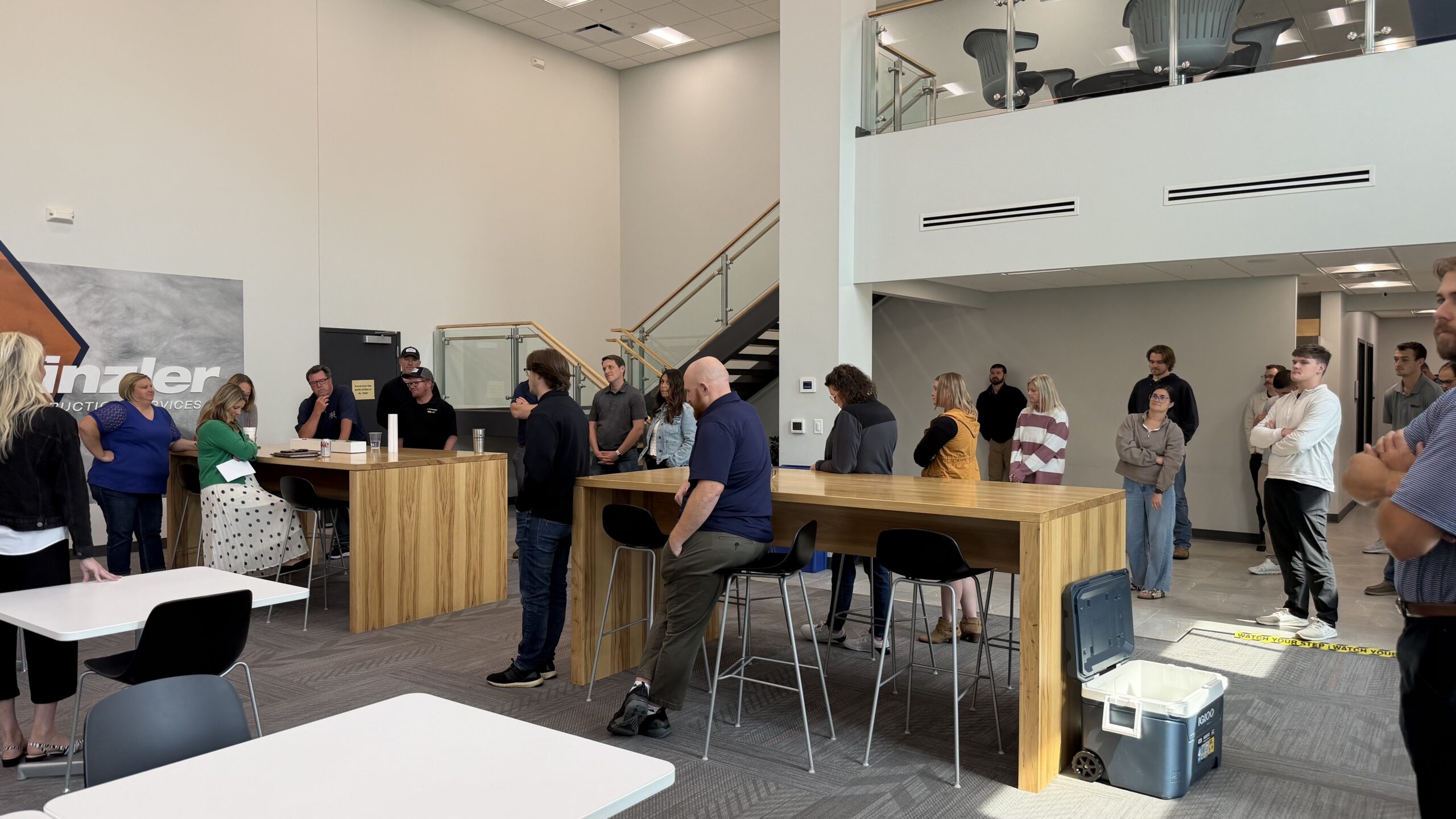
This week, our organization joined construction companies across the industry in a moment of silence to honor those we’ve lost to suicide and to stand behind those still fighting. It’s a small gesture next to a crisis this size, but it’s part of something bigger — an industry that’s starting to treat mental health with the same seriousness it treats a hard hat.
Kinzler Corporation and its family of companies are committed to helping bring those numbers down, because the people who build our communities deserve to be looked out for, too. Let’s keep that door open for each other, in every part of our organization.
If you or someone you know is struggling, the 988 Suicide & Crisis Lifeline is available 24/7 by call or text at 988.