
If you’re building a new home, finishing a basement, or just trying to figure out why your energy bills keep climbing, chances are you’ve run into a decision every homeowner eventually faces: spray foam insulation or blown-in insulation?
Both do the same basic job, keeping conditioned air inside and the outdoors outside, but spray foam insulation and blown-in insulation get there in very different ways. The right choice depends on your home, your budget, and what you’re trying to solve. Here’s a straightforward breakdown of spray foam insulation and blown-in insulation to help you figure out which one fits your project.
What Is Spray Foam Insulation?
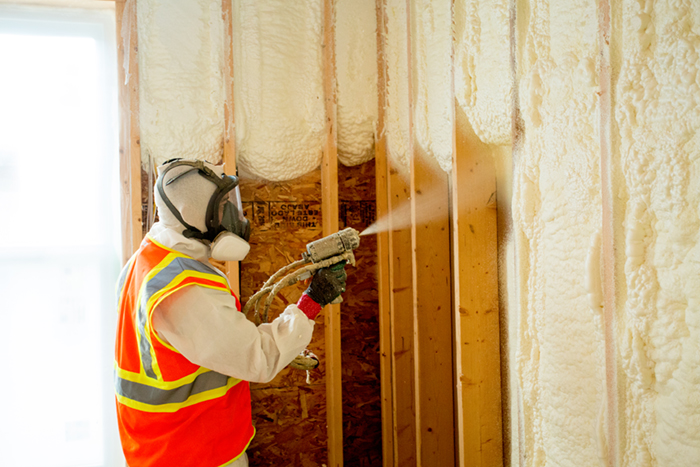
Spray foam insulation starts as a liquid. It’s sprayed into wall cavities, attics, rim joists, or crawl spaces, where it expands on contact and hardens into a solid layer that seals gaps, cracks, and seams as it goes.
There are two main types of spray foam insulation:
- Open-cell spray foam insulation is lighter and more affordable, with a lower R-value per inch. It’s a good fit for interior walls and areas where soundproofing matters as much as insulating.
- Closed-cell spray foam insulation is denser, offers a higher R-value per inch, and adds a layer of moisture resistance — making it a strong choice for basements, crawl spaces, and areas prone to humidity.
Because it expands to fill irregular spaces, spray foam insulation is particularly effective at sealing the small gaps around wiring, plumbing, and framing that other insulation types tend to miss.
What Is Blown-In Insulation?
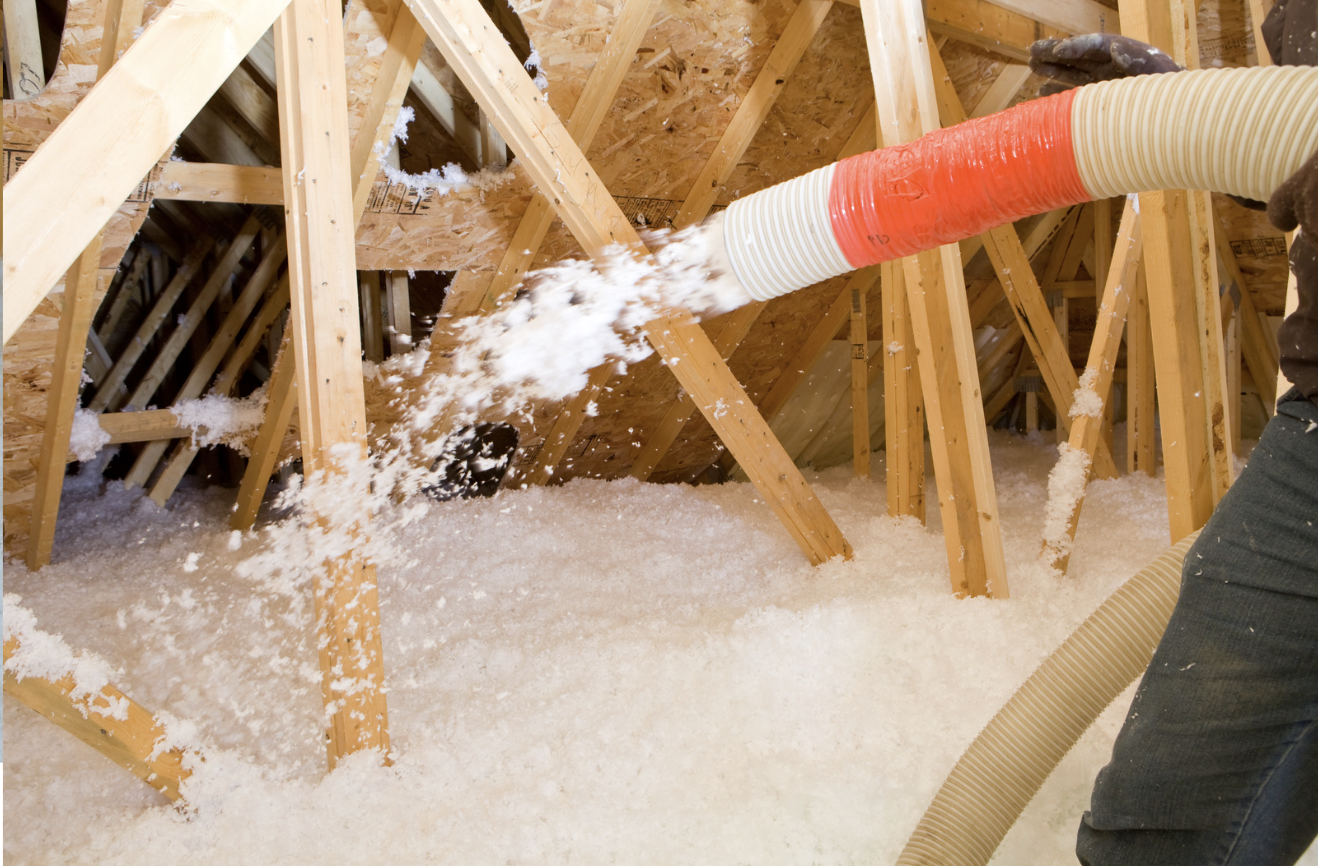
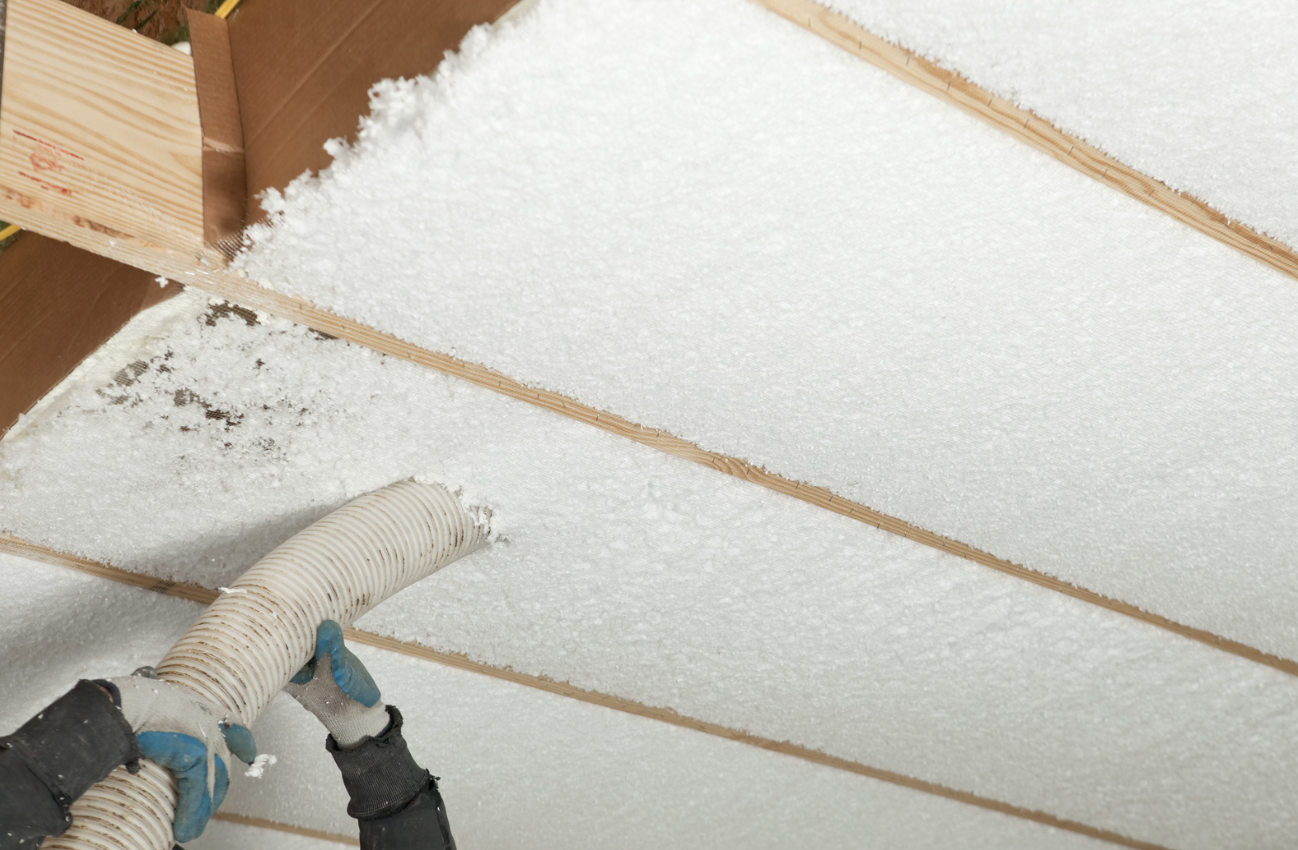
Blown-in insulation, sometimes called loose-fill insulation, is made of fiberglass or cellulose material that’s mechanically blown into attics, walls, and other open cavities using specialized equipment. Instead of expanding and sealing like spray foam insulation, blown-in insulation settles into place, filling the space with a dense layer of insulating fiber.
Blown-in insulation is a popular choice for:
- Attic insulation in both new construction and existing homes
- Retrofitting older homes where wall cavities are already closed
- Large, open areas where speed and cost-efficiency matter
Because it doesn’t require opening up walls the way spray foam insulation sometimes does, blown-in insulation is often the more practical option for upgrading an existing home’s energy efficiency without a full renovation.
Cost, R-Value & Application
Cost: Blown-in insulation is generally the more budget-friendly option upfront, both in materials and labor. Spray foam insulation costs more per square foot, but that difference is often offset over time through energy savings and air sealing.
R-value: Closed-cell spray foam insulation offers the highest R-value per inch of any common insulation material, meaning you can achieve strong thermal performance without needing as much depth. Blown-in insulation requires more material to hit the same R-value, which matters most in tight spaces like attic corners or shallow rafters.
Air sealing: This is where spray foam insulation has a clear edge. Because it expands into gaps and cracks, spray foam insulation does double duty as both insulation and an air barrier. Blown-in insulation slows heat transfer but doesn’t seal air leaks the same way, so it’s often paired with separate air-sealing work for best results.
Moisture resistance: Closed-cell spray foam insulation holds up better in damp environments like basements and crawl spaces. Cellulose and fiberglass blown-in insulation can lose effectiveness if it gets wet, so it’s better suited to dry, well-ventilated spaces like attics.
Installation time: Blown-in insulation installs quickly, often within a matter of hours for an average attic. Spray foam insulation takes longer to apply and cure, and typically requires the space to be unoccupied during installation.
Which One Should You Choose?
There’s no single right answer, as it all depends on the project:
- Choose spray foam insulation if you’re dealing with a space prone to air leaks, moisture, or temperature extremes — like a rim joist, crawl space, or a home in a climate with harsh winters.
- Choose blown-in insulation if you’re insulating a large, open attic, working within a tighter budget, or retrofitting an existing home without opening up the walls.
- Consider combining both. Many homes benefit from spray foam insulation in moisture-prone or hard-to-seal areas, paired with blown-in insulation in the attic for cost-effective, large-area coverage.
A quick home assessment can help pinpoint exactly where you’re losing the most energy, which makes the choice between spray foam insulation and blown-in insulation a lot easier.
Get an Expert Opinion Before You Decide
Every home is different, and the best insulation strategy usually isn’t one-size-fits-all. As an employee-owned family of companies, Kinzler Corporation’s insulation brands — including Kinzler Construction Services, Leading Edge Insulation Services, and Banker Insulation — install both spray foam insulation and blown-in insulation across the Midwest, Southwest, and beyond, so our recommendation is based on what’s actually best for your home, not a one-product playbook.
Reach out to your local Kinzler Corporation insulation team to schedule an assessment and get a straight answer on whether spray foam insulation, blown-in insulation, or a combination of both will work best for your space, your climate, and your budget.